PRP versus PRF: What’s the difference?
You hear a lot about PRP (platelet rich plasma) versus PRF (platelet rich fibrin) and how one may be better than the other. There’s a lot of information out there so it’s important to understand the principal differences between these two agents and why you might use one versus the other.
Both PRP and PRF are derived from one’s own whole blood. A sample of blood is collected. In the case of PRP it is collected in a tube with anti-coagulant to prevent the blood from clotting. In the case of PRF in a tube without anti-coagulant.
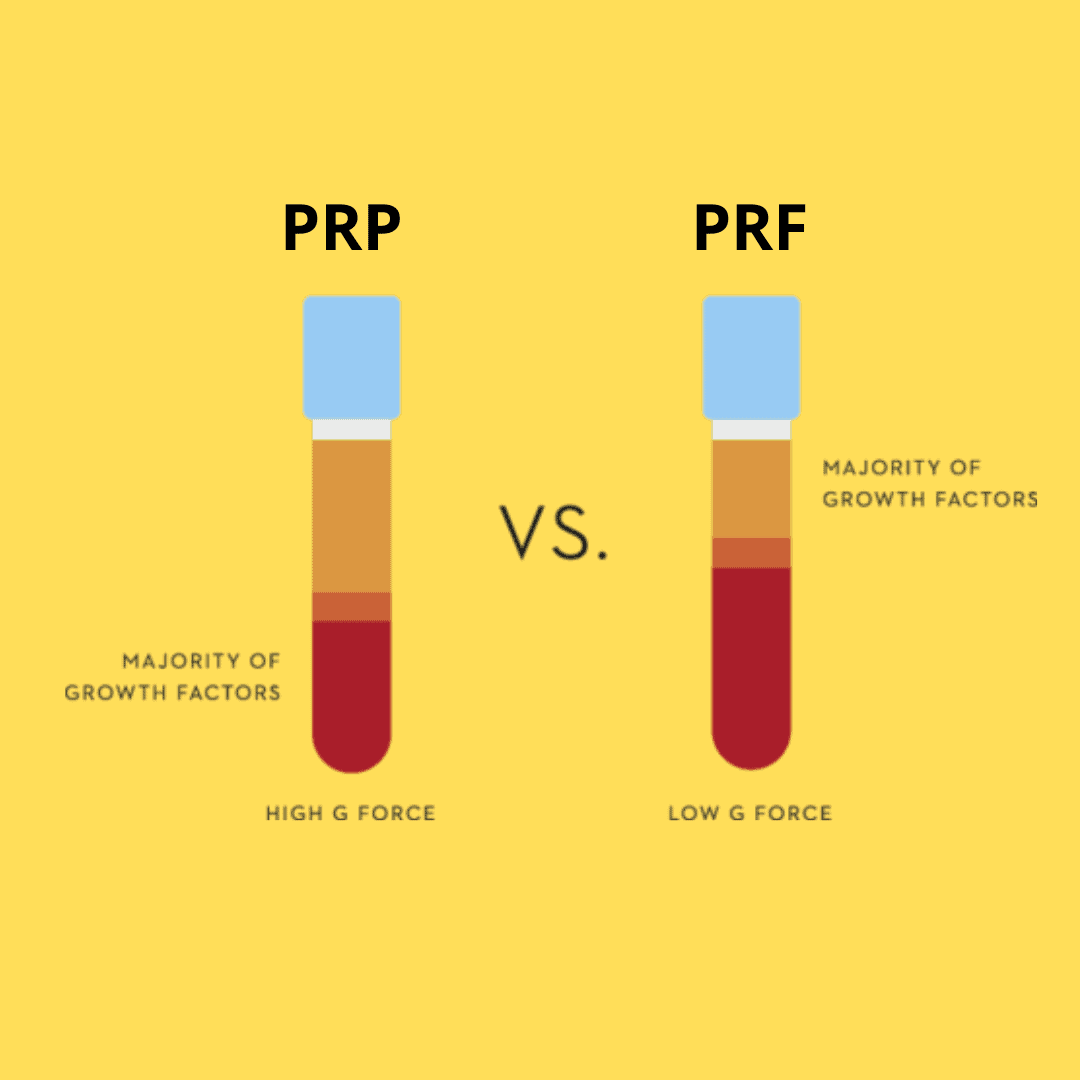
The blood is then spun in a centrifuge to separate it into its various components – red blood cells, plasma, white blood cells, stem cells. The goal is to isolate platelets from blood. Platelets are proteins in the blood that aggregate together to assist clotting and release growth factors to initiate a wound healing response and repair tissue.
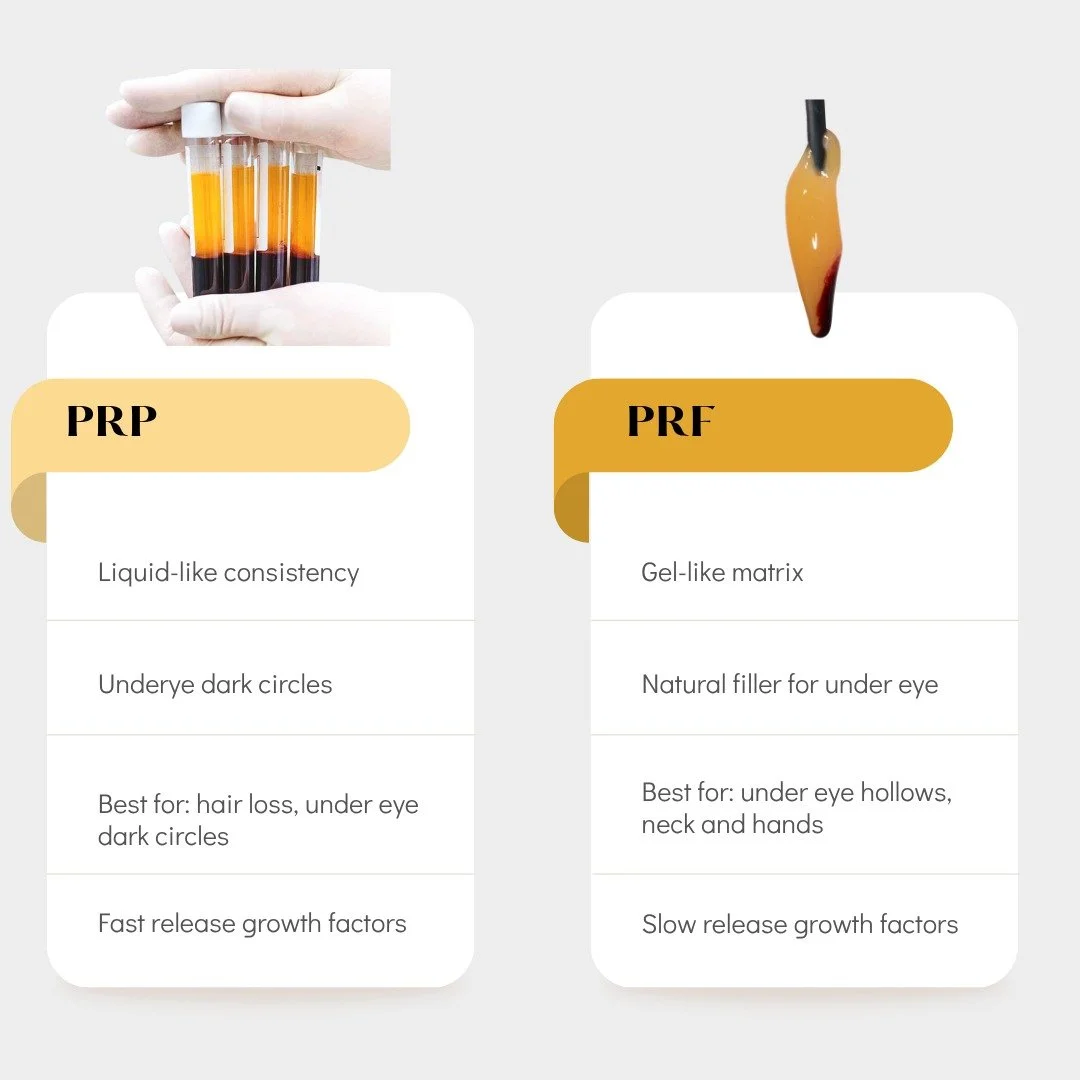
PRP:
derived from your own whole blood
spun at a high speed
largely composed of platelets
releases growth factors immediately and it high concentrations.
Does not coagulate; easily applied topically or safely injected
PRF:
derived from your own whole blood
Spun at slow speeds
Composed of platelets, white blood cells, stem cells
Releases growth factors slowly over days to weeks in lower concentrations
Coagulates quickly into a fibrin/gel clot; must be injected quickly after spinning, and with caution and could cause vascular occlusion
Not for topical use after laser or microneedling
Use PRP for topical applications such as after laser or microneedling, for hair restoration and for early signs of aging. It is also useful for improving overall skin radiance and reducing hyperpigmentation. It is also used for joint injections and tendonitis treatment.
Use PRF for more advanced signs of aging, deeper wrinkles and folds and as a natural under eye filler (with caution). It is also used for bone grafting and after dental extractions.